
 EN

Selecting the right hermetic condensing unit for beverage cooling applications requires a thorough understanding of capacity, efficiency, and application-specific performance demands. The hermetic condensing unit serves as the heart of any beverage refrigeration system, combining the compressor, condenser, and receiver into one integrated package. For beverage cooling, the choice between different hermetic condensing unit models directly impacts energy costs, product quality, and operational reliability. Understanding how to match a hermetic condensing unit to your specific beverage cooling needs ensures you avoid undersized systems that fail to maintain temperature and oversized units that waste energy and capital.
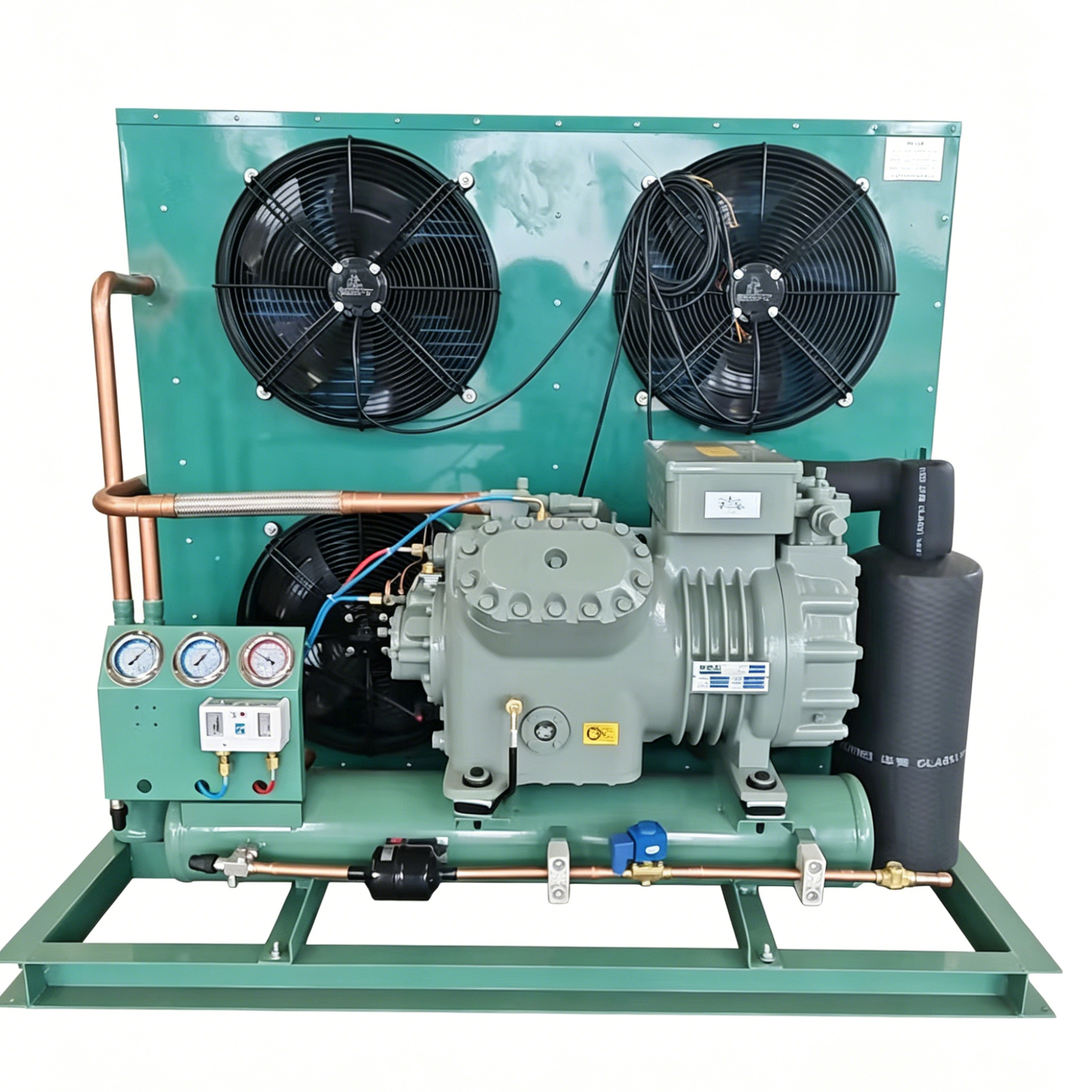
Beverage cooling applications span from small convenience store coolers to large-scale distribution centers, and each scenario demands distinct characteristics from the hermetic condensing unit you deploy. The thermal load of beverage products, ambient temperature conditions, and required pull-down time all influence which hermetic condensing unit model will deliver optimal performance. Industrial beverage operations depend on maintaining precise temperature control while minimizing operational costs, making the hermetic condensing unit selection process critical to overall profitability and customer satisfaction.
Understanding Capacity and Cooling Performance Requirements
Matching Refrigeration Capacity to Beverage Load
The fundamental requirement for any beverage cooling system is selecting a hermetic condensing unit with sufficient refrigeration capacity to handle the thermal load. Beverage products absorb heat from ambient environments, through storage cabinet walls, and from restocking activities, creating a continuous cooling demand. A properly sized hermetic condensing unit must remove this heat while maintaining the target temperature setpoint, typically between 35°F and 45°F for most beverages. Undersized hermetic condensing unit models will struggle during peak demand periods, leading to temperature rise, product spoilage, and customer complaints. Conversely, an oversized hermetic condensing unit cycles inefficiently, wasting energy and driving up operational costs unnecessarily.
Cooling Efficiency in Ambient Temperature Variations
Environmental conditions dramatically affect how effectively a hermetic condensing unit operates in beverage cooling applications. Outdoor or high-ambient installations expose the hermetic condensing unit to elevated temperatures that reduce condensing efficiency and increase compressor work. A hermetic condensing unit rated for 90°F ambient conditions will experience reduced capacity at higher temperatures and may require condenser fans or additional heat rejection mechanisms. Indoor retail installations with moderate climate control generally allow the hermetic condensing unit to operate at peak efficiency. Understanding your facility's typical ambient temperature range ensures you select a hermetic condensing unit that maintains consistent performance throughout seasonal variations and daily operational cycles.
Refrigerant Type and Environmental Compliance Factors
Modern Refrigerant Selection for Beverage Systems
The refrigerant type used in your hermetic condensing unit significantly impacts both performance and regulatory compliance for beverage cooling. Historically, beverage cooling systems used R-22 refrigerant, but environmental regulations have phased out this substance in favor of lower-GWP alternatives. Most modern hermetic condensing unit designs employ R-404A, R-448A, or R-449A, each offering distinct efficiency profiles and environmental characteristics. The hermetic condensing unit you select must align with current EPA regulations in your jurisdiction and provide the thermodynamic properties needed for reliable beverage cooling. Transitioning to a newer hermetic condensing unit with environmentally compliant refrigerant also typically improves energy efficiency, offsetting the initial equipment investment through reduced operational costs.
Oil Management and Compressor Reliability
Proper oil circulation within a hermetic condensing unit is essential for compressor reliability in beverage cooling applications. The hermetic condensing unit design must include adequate oil return pathways to prevent compressor damage from oil starvation. Semi-hermetic hermetic condensing unit configurations allow for easier oil management and compressor maintenance compared to fully sealed designs. Cold ambient conditions or extended part-load operation can complicate oil return in a hermetic condensing unit, requiring careful system design and monitoring. Selecting a hermetic condensing unit from manufacturers who have optimized oil management for your specific refrigerant type prevents costly compressor failures and extends equipment life in beverage cooling duty.
Installation Considerations and Application-Specific Fit
Space and Mounting Requirements
Physical installation constraints often dictate which hermetic condensing unit model fits your beverage cooling system. Retail environments typically have limited mechanical room space, requiring compact hermetic condensing unit designs that integrate efficiently with existing infrastructure. A remote hermetic condensing unit installation provides flexibility for larger facilities, placing the unit outside or in a dedicated mechanical area away from customer spaces. The hermetic condensing unit must have adequate clearance for service access, condenser airflow, and vibration isolation to prevent operational noise that disturbs customers or staff. Evaluating your specific installation space before selecting a hermetic condensing unit model prevents costly retrofitting and ensures smooth system commissioning for beverage cooling applications.
Maintenance Access and Service Support
Long-term reliability of your beverage cooling system depends on selecting a hermetic condensing unit design that allows straightforward maintenance and repairs. Semi-hermetic hermetic condensing unit configurations feature externally accessible compressor valves and service ports, simplifying diagnostics and component replacement. Fully hermetic hermetic condensing unit designs offer lower initial cost but require complete unit replacement if internal components fail, creating longer downtime for beverage operations. Availability of replacement parts, local service technician expertise, and warranty terms should all influence your hermetic condensing unit selection decision. A hermetic condensing unit from manufacturers with established service networks ensures minimal disruption to your beverage cooling operations when maintenance becomes necessary.
FAQ
What refrigeration capacity should a hermetic condensing unit have for a 500-gallon beverage cooler?
A 500-gallon beverage cooler typically requires a hermetic condensing unit with 3 to 5 tons of refrigeration capacity, depending on ambient temperature, cooler insulation quality, and usage patterns. Peak demand scenarios, such as rapid restocking or high outdoor temperatures, may require capacity at the upper end of this range to prevent temperature rise. A qualified HVAC technician should perform a detailed load calculation considering your specific facility conditions to determine the exact hermetic condensing unit capacity needed.
Can a hermetic condensing unit designed for air conditioning be used for beverage cooling?
While air conditioning and beverage cooling both use similar compressor technology, a hermetic condensing unit must be specifically configured for low-temperature duty to function reliably in beverage applications. Air conditioning systems typically operate at higher evaporating temperatures and lower pressure differentials than beverage cooling systems, meaning an air conditioning hermetic condensing unit lacks the necessary capacity and design robustness. Always specify a hermetic condensing unit explicitly rated for commercial refrigeration or beverage cooling duty to ensure proper performance and warranty coverage.
How often should a hermetic condensing unit for beverage cooling be serviced?
Most manufacturers recommend annual service for a hermetic condensing unit used in beverage cooling, including oil analysis, filter dryer replacement, and system pressure checks. High-usage environments or outdoor installations may require semi-annual or quarterly servicing to maintain optimal efficiency and prevent compressor damage. Regular maintenance of your hermetic condensing unit extends equipment life, maintains energy efficiency, and prevents costly emergency repairs during peak beverage demand seasons.