 EN

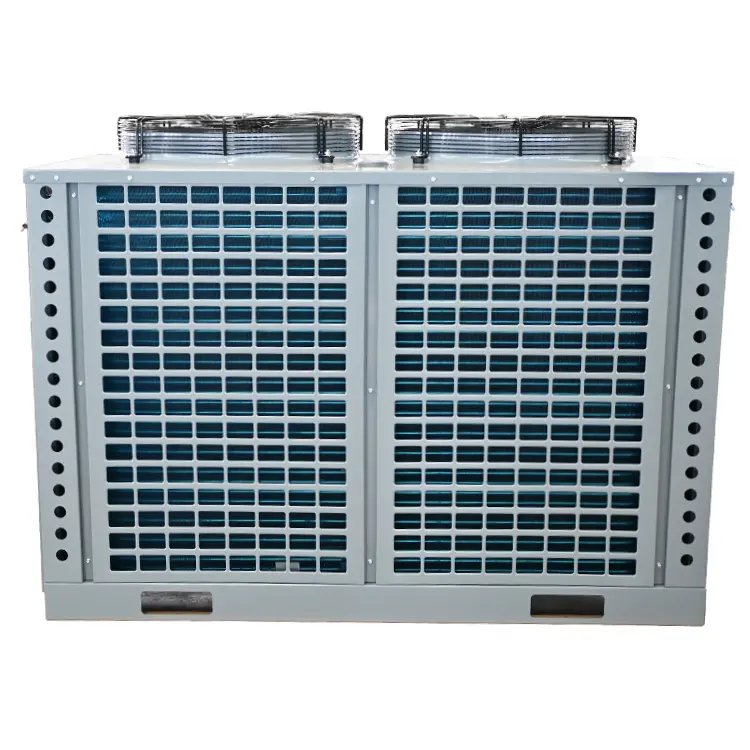
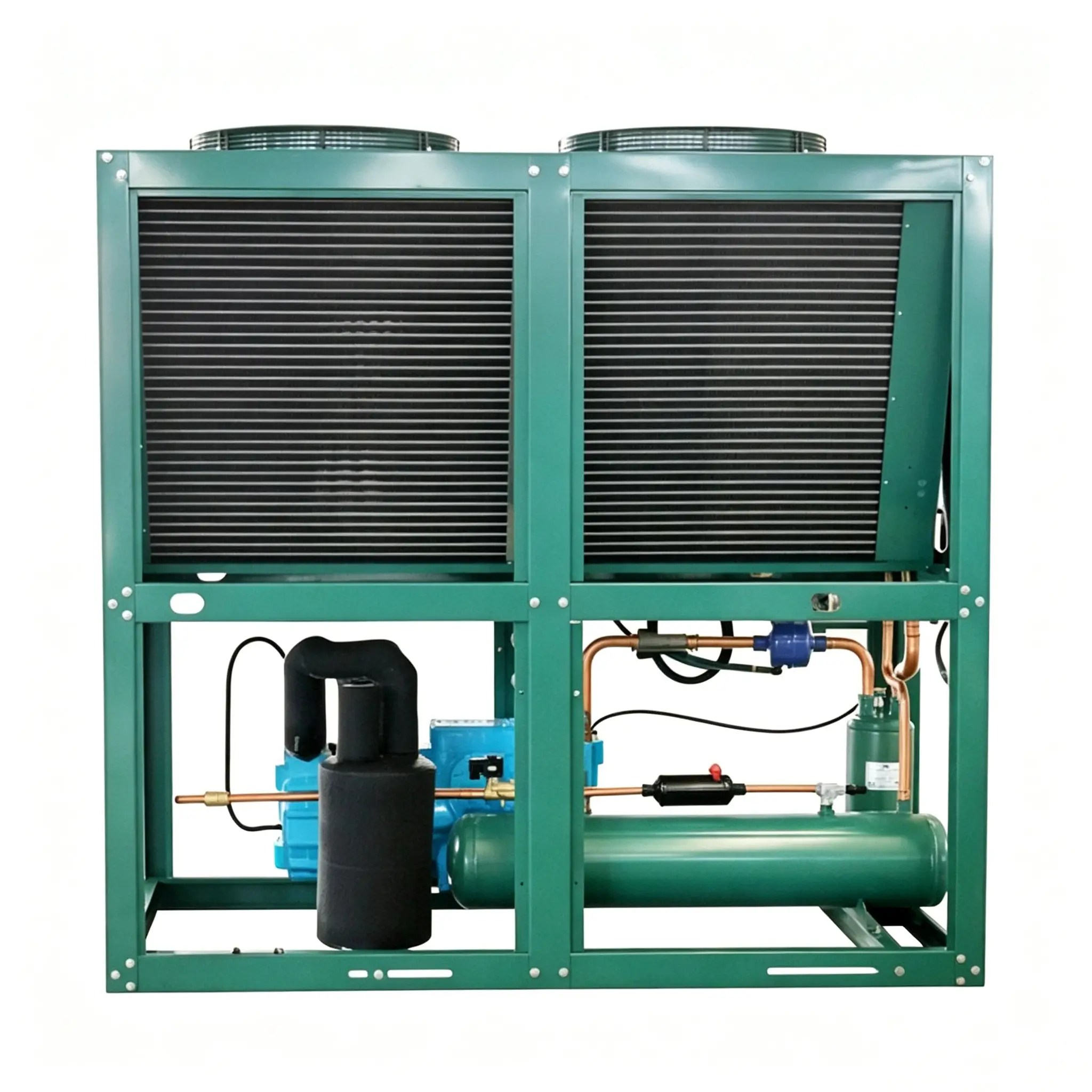
The V type condensing unit represents a significant advancement in air-cooled refrigeration technology, fundamentally changing how industrial cooling systems manage heat rejection. Understanding the mechanics of the V type condensing unit is essential for facility managers, HVAC engineers, and refrigeration professionals seeking optimal thermal performance. The distinctive geometry of the V type condensing unit enables enhanced airflow patterns and superior heat transfer efficiency compared to traditional linear condenser arrangements.
The V type condensing unit design incorporates a dual-fin array configuration that maximizes surface area exposure to ambient air circulation. This architectural innovation directly impacts the overall efficiency of air-cooled condensing units by improving thermal exchange rates and reducing energy consumption. Facilities implementing the V type condensing unit experience measurable improvements in refrigeration cycle performance, lower operational costs, and extended equipment lifespan.
How the V-Shaped Configuration Enhances Heat Transfer
Geometry and Airflow Optimization in V Type Condensing Unit Design
The V type condensing unit achieves superior heat rejection through its distinctive angular arrangement of aluminum fins and copper tubing. The V type condensing unit positioning allows ambient air to flow through both angled surfaces simultaneously, eliminating dead zones where heat dissipation becomes inefficient. This dual-surface exposure is fundamentally different from flat-plate condensers, where airflow primarily engages a single primary surface. The V type condensing unit geometry creates natural convection channels that promote turbulent mixing of air across the entire condenser face, enhancing thermal contact and heat transfer coefficients.
Surface Area Multiplication in V Type Condensing Unit Systems
The V type condensing unit design increases effective cooling surface area by approximately 25 to 40 percent compared to traditional rectangular condenser configurations. Each finned tube within the V type condensing unit arrangement is positioned to maximize exposure to incoming air velocity, preventing air bypass and ensuring consistent heat extraction. The V type condensing unit fins are typically spaced at optimized intervals to balance airflow resistance with heat transfer performance. This precision engineering in the V type condensing unit construction means that refrigerant flowing through the tubing encounters more aggressive cooling air, resulting in faster phase change and better condenser performance.
Operational Advantages of V Type Condensing Unit Technology
Energy Efficiency and Reduced Fan Power Requirements
Facilities adopting a V type condensing unit experience substantial reductions in fan motor energy consumption because the enhanced heat transfer characteristics require less air volume to achieve the same cooling effect. The V type condensing unit thermodynamic advantages allow compressors to discharge refrigerant at lower pressures, reducing compression work and system power draw. For industrial refrigeration applications operating year-round, the cumulative energy savings from a V type condensing unit deployment often exceed 15 to 20 percent compared to conventional condenser types. The V type condensing unit efficiency improvements translate directly into lower electricity bills and reduced carbon footprint for cold storage facilities, food processing plants, and data centers.
Compact Footprint and Installation Flexibility
The V type condensing unit achieves excellent heat rejection performance while occupying significantly less rooftop or outdoor space than equivalent-capacity flat-plate condensers. This spatial efficiency makes the V type condensing unit ideal for retrofit applications where existing infrastructure space is limited. The V type condensing unit compact design also simplifies maintenance access and cleaning procedures, as operators can reach fin surfaces from both angular sides. Facilities with space constraints or those expanding cooling capacity without expanding physical area find the V type condensing unit to be an optimal solution that balances performance with practical site limitations.
Heat Rejection Performance Metrics and Real-World Application Context
Condenser Capacity Ratings and System Integration
The V type condensing unit specifications are typically rated in tons of refrigeration capacity, with standard models ranging from 5 tons to 100 tons per unit, depending on tube diameter, fin density, and fan motor size. When engineers specify a V type condensing unit for a refrigeration system, they must match the V type condensing unit capacity to the compressor displacement and expected heat load profile. The V type condensing unit performance is specified at standardized ambient air temperatures, usually 95°F to 105°F for industrial design conditions. Proper V type condensing unit selection ensures that condenser subcooling remains between 5°F and 15°F, optimizing expansion device efficiency and overall system performance.
Climate Adaptation and Seasonal Performance of V Type Condensing Unit Systems
The V type condensing unit excels in both hot and moderate climates because its enhanced geometry maintains effective heat rejection even during peak summer load periods. In cooler seasons, the V type condensing unit allows condensing pressures to drop substantially, providing further energy savings and enabling variable-speed fan motors to reduce speed and noise. The V type condensing unit design adapts well to variable ambient conditions because the angular fin arrangement continues to promote forced convection even at low fan speeds. Industrial facilities in regions with seasonal temperature fluctuations particularly benefit from V type condensing unit installations because the technology accommodates both peak summer demands and shoulder-season efficiency optimization.
FAQ
What makes the V type condensing unit more effective than traditional flat condensers?
The V type condensing unit utilizes dual-angled fin arrays that expose cooling surfaces to incoming air from multiple directions, eliminating stagnant zones and increasing overall heat transfer coefficients. Traditional flat condensers present a single primary cooling surface, whereas the V type condensing unit geometry forces air to interact with both sides of the angled tube arrangement, multiplying effective surface area by 25 to 40 percent. This enhanced thermal contact directly translates to lower condensing pressures, reduced compressor work, and superior energy efficiency across the entire refrigeration cycle.
How does the V type condensing unit impact long-term operating costs?
The V type condensing unit reduces long-term operating costs through multiple mechanisms: lower fan motor power consumption due to enhanced heat rejection, reduced compressor energy draw from lower discharge pressures, and extended equipment service life resulting from optimized thermal conditions. For typical industrial refrigeration applications operating 8,000 hours annually, a V type condensing unit installation can generate 15 to 20 percent total system energy savings, generating substantial cost benefits over 5 to 10 year equipment lifecycles. Additionally, the V type condensing unit design simplifies maintenance cleaning, reducing labor costs and downtime associated with condenser fouling.
Can the V type condensing unit be retrofitted into existing refrigeration systems?
Yes, the V type condensing unit can be retrofitted into most existing air-cooled refrigeration systems, provided that the electrical connections, refrigerant lines, and mounting structures are compatible with the new condenser specifications. The V type condensing unit compact footprint makes retrofitting particularly feasible in space-constrained locations where traditional condenser replacement would be problematic. Facility engineers should verify that the V type condensing unit capacity matches the system compressor displacement and that structural support can accommodate the V type condensing unit weight and vibration characteristics during installation planning.