 EN
EN

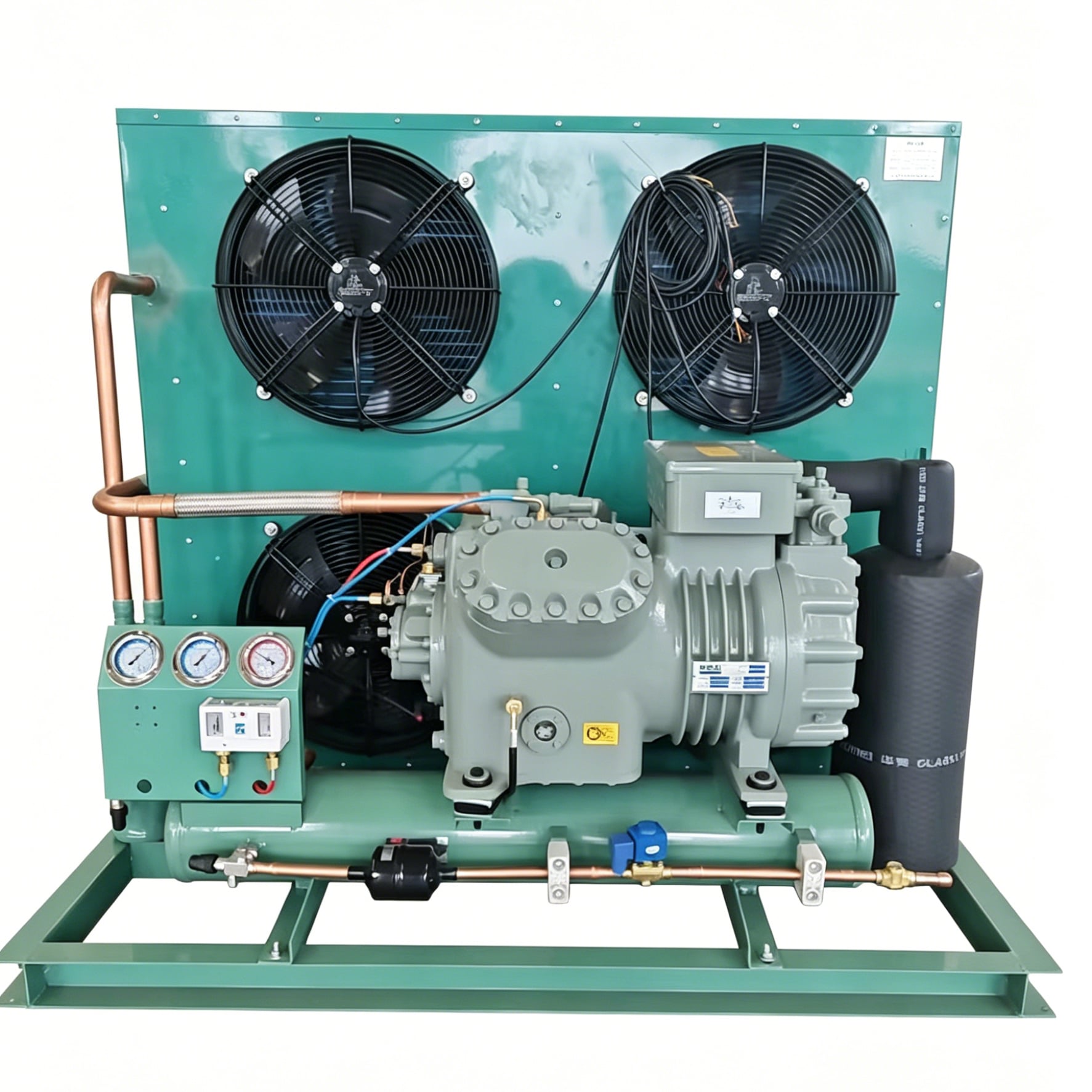
The v type condensing unit has emerged as the preferred solution for applications demanding exceptionally low noise levels in refrigeration and cooling systems. Industrial facilities, commercial spaces, and sensitive environments require equipment that operates quietly without sacrificing cooling performance. Understanding why the v type condensing unit stands out requires examining its distinctive mechanical architecture, vibration control mechanisms, and acoustic engineering principles. This article explores the technical reasons behind the widespread adoption of v type condensing units for noise-critical applications and how their design translates into measurable acoustic advantages.
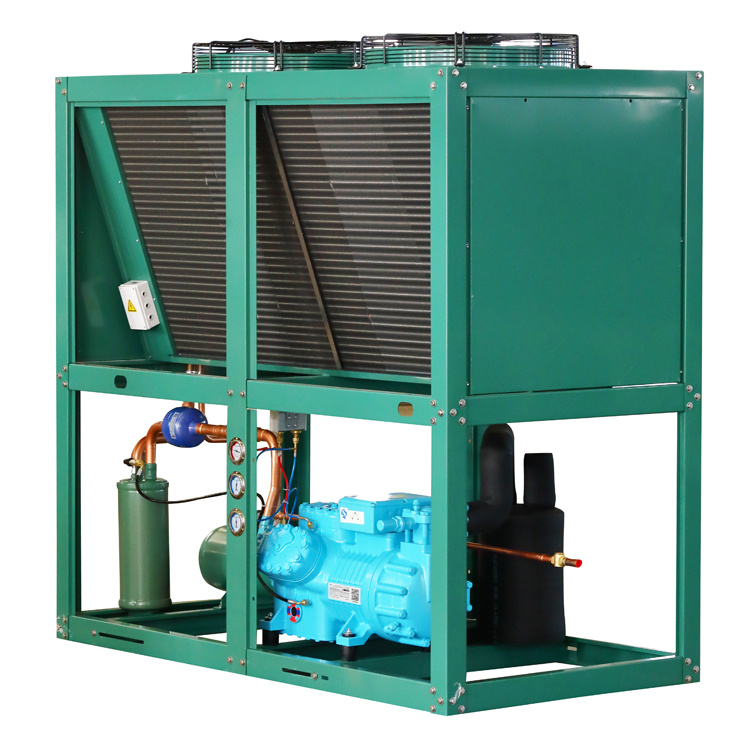
The acoustic performance of refrigeration equipment directly impacts operational efficiency, employee comfort, and regulatory compliance. A v type condensing unit delivers superior noise reduction through inherent design features that conventional units cannot match. By examining the specific engineering characteristics of this configuration, facility managers and engineers can make informed decisions about equipment selection, system integration, and long-term operational cost management in noise-sensitive environments.
Mechanical Design Advantages of V-Type Condensing Units
Balanced Weight Distribution and Vibration Isolation
The fundamental benefit of a v type condensing unit lies in its geometrical symmetry and weight distribution. The v-shaped compressor arrangement places equal mass on both sides of the centerline, creating natural balance that significantly reduces vibration transmission. Unlike traditional linear or parallel configurations, a v type condensing unit distributes compressor forces more evenly throughout the unit frame. This balanced approach minimizes the oscillating forces that typically radiate through mounting points and structural connections, directly translating to reduced noise emission at the source.
When compressors operate in unbalanced configurations, secondary forces develop during each compression cycle, causing the entire unit to vibrate at specific frequencies. These vibrations propagate through building structures, amplifying sound levels across larger areas. A v type condensing unit naturally counters this phenomenon because opposing pistons create reciprocal forces that largely cancel each other. This mechanical cancellation effect is one of the primary reasons why the v type condensing unit performs so exceptionally well in noise-sensitive applications compared to alternative designs.
Structural Rigidity and Damping Properties
The v type condensing unit frame structure provides enhanced rigidity that prevents resonant vibration amplification. The angular geometry creates diagonal bracing paths that distribute stress loads more effectively than traditional rectangular frames. This improved structural stiffness reduces frame deflection during compressor operation, preventing the low-frequency rumbling that characterizes poorly designed refrigeration equipment. Engineers specifically design v type condensing unit mounting bases with strategic reinforcement patterns to achieve optimal damping characteristics while maintaining lightweight construction for transport and installation.
Advanced v type condensing unit manufacturers incorporate elastomeric isolation mounts that absorb residual vibration energy before it reaches building foundations. These mounts work synergistically with the inherent mechanical balance of the v-shaped design, creating a multi-layered noise reduction strategy. The v type condensing unit's rigid frame minimizes the transmission of high-frequency vibrations while the isolation system attenuates low-frequency components, resulting in comprehensive noise suppression across the acoustic spectrum.
Acoustic Engineering and Sound Generation Mechanisms
Reduced Pulsation and Pressure Fluctuations
Refrigerant pulsation represents a major noise source in condensing equipment, yet the v type condensing unit mitigates this problem through its cylinder arrangement. The staggered firing order of v type condensing unit pistons creates overlapping compression strokes that smooth refrigerant discharge flow. When pistons fire sequentially rather than simultaneously, pressure pulses in the discharge line blend together instead of creating sharp spikes. This continuous flow characteristic of the v type condensing unit produces lower amplitude pressure fluctuations, which are the primary driver of noise radiation from discharge lines and muffler components.
Traditional parallel compressor arrangements create highly repetitive pressure pulses that interact with system piping, creating resonance phenomena that amplify certain frequencies. The v type condensing unit breaks this resonance pattern by introducing variable timing between discharge events. This acoustic advantage extends throughout the entire system because downstream components experience steadier refrigerant flow, reducing vibration-induced noise generation in the condenser coil, oil separator, and receiver tank. The v type condensing unit's inherent ability to smooth pressure waves represents a fundamental advantage that cannot be fully replicated through additional silencing devices.
Bearing Load Distribution and Mechanical Noise
Mechanical contact between moving parts generates noise through friction, impact, and deformation. The v type condensing unit minimizes these mechanisms by distributing bearing loads across multiple contact points symmetrically arranged around the crankshaft. This load distribution reduces localized stress concentrations that would otherwise create audible friction noise and vibration. Crankshaft bearings in a v type condensing unit experience more uniform loading cycles, reducing the rate of wear and associated noise generation from bearing degradation. The mechanical efficiency of the v type condensing unit design means less wasted energy converts to heat and vibration, further reducing overall noise output.
Valve noise in reciprocating compressors arises from impact forces as intake and discharge valves open and close. The v type condensing unit configuration enables manufacturers to employ larger, more sophisticated valve designs that operate with lower impact velocities. The smoother mass flow patterns created by the v-shaped piston arrangement allow valve opening and closing events to occur more gradually, reducing the acoustic energy released during each compression cycle. This valve design advantage is exclusive to v-type geometry and represents another layer of noise reduction inherent to the v type condensing unit concept.
System Integration and Installation Considerations
Foundation Requirements and Isolation Effectiveness
Proper installation of a v type condensing unit maximizes its acoustic benefits through appropriate foundation design and vibration isolation. The v type condensing unit should be mounted on resilient elastomeric pads or active vibration isolation systems that attenuate frequencies below the critical operating range. The balanced nature of the v type condensing unit means that even modest isolation systems achieve excellent results, as the primary vibration sources are already minimized at the source. Foundation flexibility must be carefully tuned to avoid creating new resonance conditions, but the inherent smoothness of the v type condensing unit simplifies this engineering challenge compared to unbalanced designs.
Installation best practices for a v type condensing unit include adequate clearance from building structures, avoiding rigid connections that bypass isolation mounts, and ensuring proper refrigerant line support to prevent vibration transmission through piping systems. The acoustic advantages of the v type condensing unit can be substantially negated by poor installation practices that create vibration bridges to occupied spaces. Professional installation services specifically familiar with v type condensing unit requirements ensure that the equipment's inherent noise reduction benefits translate into real-world acoustic performance improvements.
Comparison with Alternative Unit Configurations
The v type condensing unit outperforms parallel and in-line compressor arrangements in acoustic output, typically delivering 3–5 decibels lower noise levels under equivalent operating conditions. This reduction corresponds to approximately 50–70% reduction in perceived sound intensity, a significant practical advantage in noise-sensitive environments. Scroll and screw compressor designs offer alternative low-noise solutions, but they sacrifice the cost efficiency and simplicity that make the v type condensing unit attractive for many industrial applications. The v type condensing unit represents an optimal balance between acoustic performance, manufacturing simplicity, maintenance accessibility, and capital investment requirements for applications prioritizing low noise levels.
FAQ
What specific noise reduction can be achieved with a v type condensing unit compared to conventional designs?
A v type condensing unit typically reduces overall noise emissions by 3–5 decibels compared to parallel or in-line reciprocating units of similar capacity. This measurement translates to practical noise level reductions of 50–70%, which represents the difference between a loud refrigerator hum and a whisper-quiet operation. The exact noise reduction depends on system operating conditions, installation quality, and the specific reference baseline unit. Sound pressure levels for properly installed v type condensing units often fall below 75 decibels at one meter distance, meeting stringent requirements for sensitive applications including hospitals, laboratories, and residential spaces.
Are there any limitations or disadvantages to selecting a v type condensing unit for noise-critical applications?
The v type condensing unit design does not introduce significant disadvantages for noise-critical applications. Initial equipment costs may be slightly higher than basic parallel configurations, but the acoustic performance advantages justify this investment. Maintenance access is sometimes more complex due to the compact v-shaped layout, though this consideration affects only routine servicing and does not impact operational reliability. Installation requirements are more specific to ensure proper vibration isolation, but experienced technicians familiar with v type condensing unit systems address this requirement straightforwardly. The v type condensing unit remains an excellent choice for applications where noise levels significantly influence occupant comfort or regulatory compliance.
How does the v type condensing unit design accommodate capacity requirements for larger cooling applications?
The v type condensing unit accommodates larger capacity requirements through increased displacement per compressor stage while maintaining the geometric balance advantages of the v-shaped configuration. Manufacturers produce v type condensing units ranging from small fractional horsepower units to large multi-hundred horsepower systems, scaling the design proportionally. Two or more complete v type condensing unit modules can be combined in parallel arrangements when single-unit capacity proves insufficient, preserving the acoustic advantages of each component. The v type condensing unit design scales effectively across the full range of industrial refrigeration capacities, making it suitable for both modest cooling needs and demanding large-scale applications requiring exceptionally low noise operation.